Scandinavia - Part 2
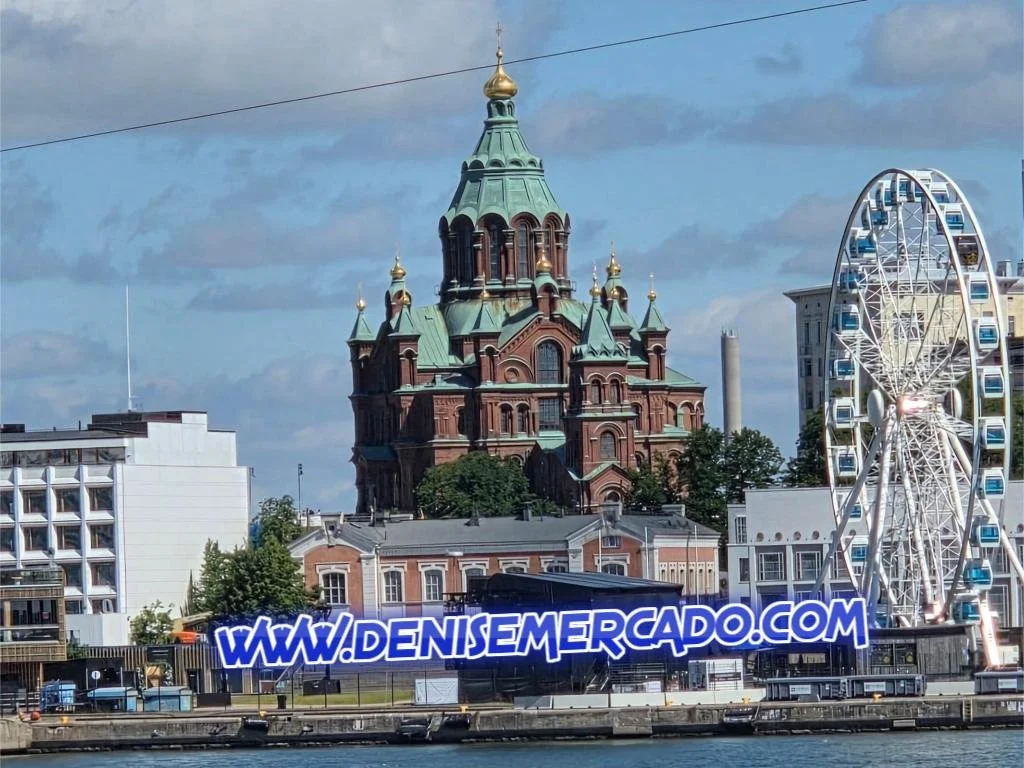
In the second part of my cruise, we visited three countries, two of which are not part of Scandinavia. Our first stop was Helsinki, Finland. Finland is a Nordic country. The Nordic countries include the Scandinavian countries of Denmark, Norway, and Sweden but also include Iceland and Finland.
I was excited about seeing Helsinki and thought this would be my favorite destination. However, this was an interesting visit.
We arrived on a Saturday. When doing my research, I noted that one of the churches I wanted to visit would close at 11am. The ship docked at 10am. I arrived at the Uspenski Cathedral 20 minutes before its closing. As you will see from the video below, this is a beautiful Greek Orthodox Cathedral built between 1862 and 1868 and is the largest Orthodox church in western Europe. Although I would have loved to have stayed longer, I was grateful for the twenty minutes to see its beauty.
I then walked to the main square of the city featuring the beautiful Helsinki Cathedral. I was so looking forward to seeing this. When researching I noted that there would be a Pride Demonstration outside the cathedral at 10am. I just assumed that it would be completed by the time I arrived at 11:30am. It was not indicated in any of my research that this was an all-day event. A sign outside the cathedral read, “NO SIGHTSEEING.” The cathedral was open, however, the guard instructed that there was no sightseeing and no picture taking. I went in and was able to look around only for a short time. A woman was singing and there was a small crowd watching the performance. Then a female pastor stepped up to the podium and began speaking in Finnish. I thought maybe I could sneak a picture or two without the guard noticing but he seemed determined as his eyes canvassed the church. I decided that it would be best if I came back later in the day when perhaps the event was over.
The Market Square was next to the cathedral, and I spent time browsing the vendor tables before exploring the Old Market Hall. This venue has been in existence since 1889. I then decided to walk to the Saint Henry Catholic Cathedral. This was a 13-minute walk from Market Square through a beautiful area of the city passed the cruise terminal.
When I arrived at Saint Henry’s, there were vendors outside displaying pride flags and souvenirs. The church was open, however, in the sanctuary was a gentleman providing a lecture to a group of people. I did not know if the lecture was related to the demonstrators outside the church. However, I noted with a quick glance that the church was too small to enter without disrupting the talk.
One of the things I do when researching destinations is make a list of the places I really want to see. I did this for Helsinki and the last thing on my list turned out to be the best.
I took a 15-minute ferry from the Helsinki Market Square to Suomenlinna Sea Fortress. This fortress is a UNESCO World Heritage site originally founded by the Swedish Crown in 1748. I loved visiting the different sites and quickly noticed that in the center of the fortress was a church. Of course, I made my way to the church where I was met with yet another “NO SIGHTSEEING” sign. This time, however, the reason was a wedding, and I arrived just in time to see the bride and groom exit. This was a military wedding that brought back so many happy memories. Military weddings are very special as you will see in the video below.
Once back at the Market Square, I walked to the Helsinki Cathedral in the hopes that the demonstration would be over and the church would be open for viewing. This was not the case. The crowd was now larger, and a parade was being organized throughout the city. As I made my way back to the cruise terminal through one of the beautiful park areas, I came upon a street performer and enjoyed his music before making my way back to the ship.
The next day, we were in Tallinn, Estonia. Estonia is one of the Baltic countries along with Latvia and Lithuania. It was Sunday and I planned on going to Mass at the Saint Peter and Saint Paul Catholic Cathedral.
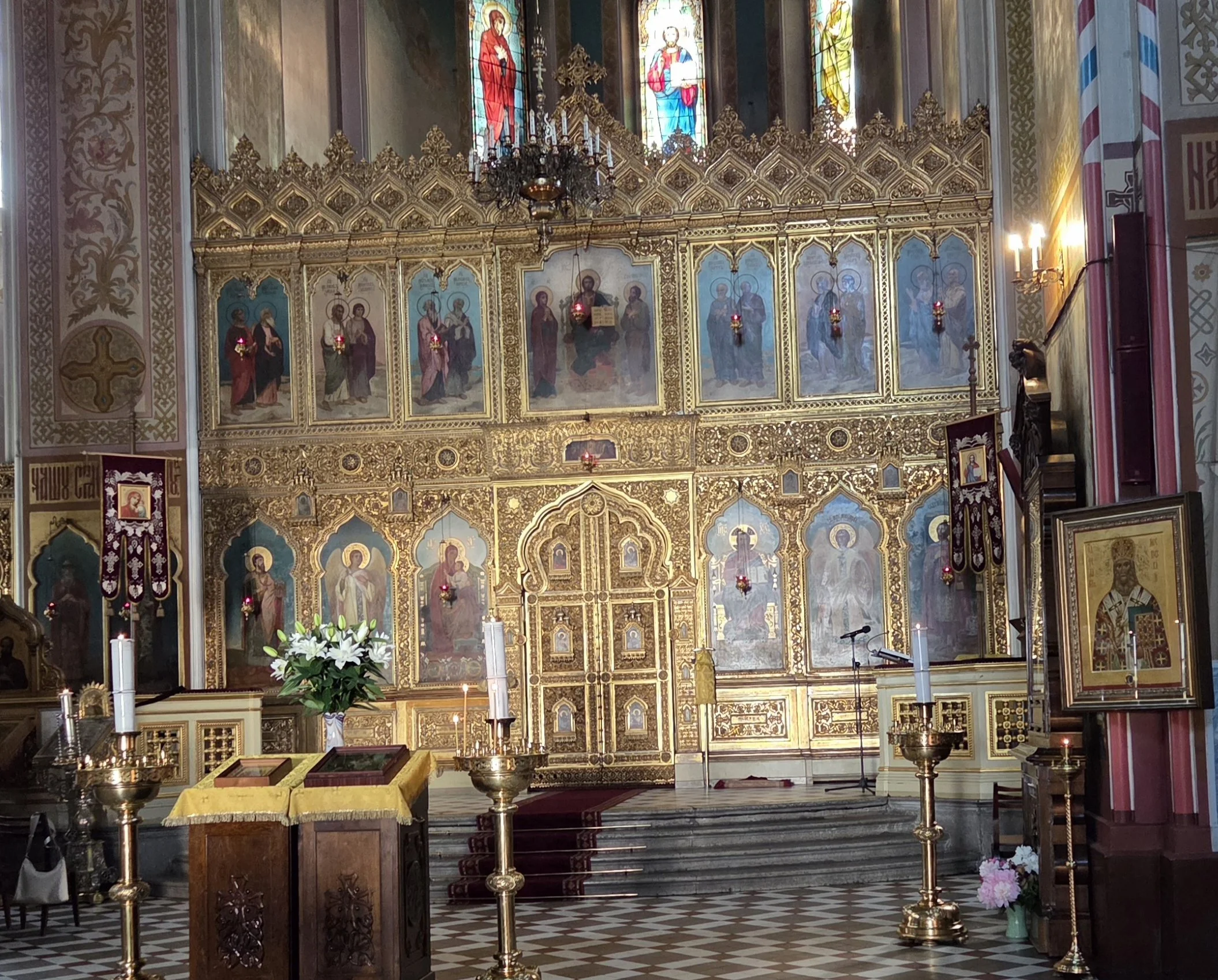
I also wanted to visit the Alexander Nevsky Orthodox Cathedral. This church opened at 8:00am and their services began at 8:30am.
I left the ship at 7:00am and walked to the Orthodox Cathedral. This cathedral is an Eastern Orthodox Cathedral built in 1894 to 1900 and was originally dedicated to the prince of Kiev. It was later named for the Russian Orthodox saint, Alexander Nevsky, known as one of the greatest heroes of Russian history. Nevsky is credited with saving the Russian people from Catholicism and being enslaved by the Germans.
The Mass at Saint Peter and Saint Paul Cathedral was in Polish. I arrived early enough to take pictures and video.
Despite my long list of things to see, I decided to roam the streets in Tallin in no particular order and just explore. Sometimes this is the best way to see the sites. On my way back to the ship, I stopped in to visit Saint Olaf’s Church.
This church was originally a Catholic church. After the Reformation, it became a Lutheran church. After World War II, the Soviets handed the church over to Baptists in 1950. Saint Olaf’s Church is the tallest church building in Estonia. During my visit a group of local children provided a fun concert.
Back on the ship, after another wonderful foot massage and a full day at sea, I was ready for our next port – Copenhagen, Denmark. Along with Norway and Sweden, Denmark is part of the European region known as Scandinavia.
We arrived in Copenhagen at 2:00pm. I had an extensive list of things I wanted to see and decided that since we would be in port for a second day that I would split my list. The cruise shuttle dropped us off at the Rosenborg Castle where I began my adventure.
The Rosenborg Castle is a 400-year-old Renaissance building originally built as a country summer house. I enjoyed exploring the grounds of this beautiful castle before heading to my first church – Sankt Ansgars Kirke Cathedral. Although I visited several other churches in Copenhagen, this was the only Catholic church found.
Saint Ansgar lived during the 800s and was archbishop of a region in the northern part of the Kingdom of the East Franks. He became known as the Apostle of the North bringing Christianity to northern Europe. The Sankt Ansgar Cathedral is the oldest Catholic church in Copenhagen. The current church was completed in 1842 and replaced an earlier chapel on its site.
Saint Frederick’s Church was next on my list. This church is an Evangelical Lutheran Church commonly known as the Marble Church with the largest marble dome in Scandinavia. What I liked best about this church were the beautiful statues of theologians displayed outside the church building.
The Amelienborg Palace was a short walking distance from the Marble Church. The palace square was quite large with soldiers guarding several entrances. When visiting Copenhagen, one of the most popular places is the Nyhavn waterfront. This area is lined with many colorful houses, restaurants, and cafes. The Danish author, Hans Christian Anderson, lived in Nyhavn for 18 years. While exploring, I found a sign on one of the souvenir shops noting this historical fact.
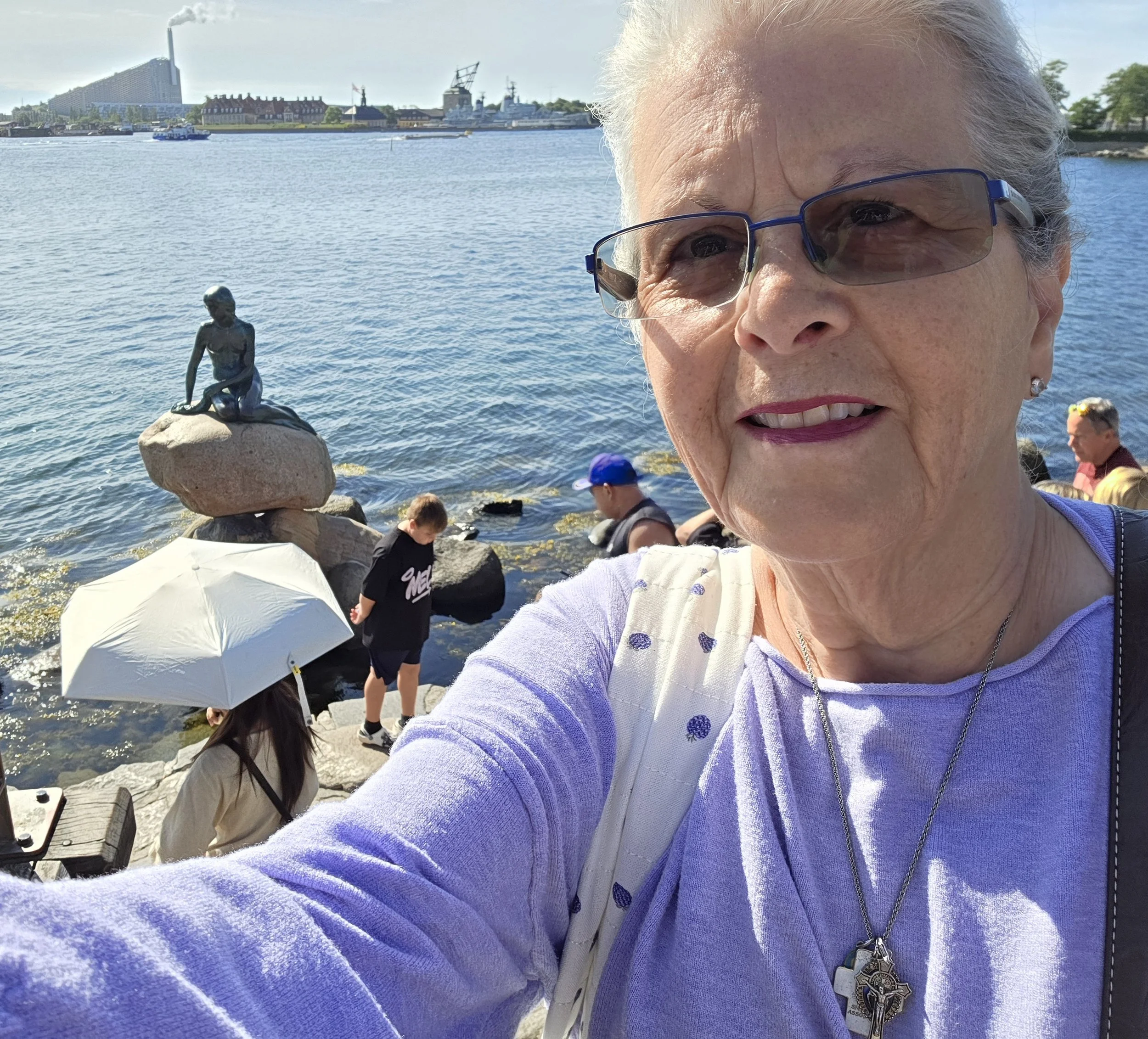
After a good night’s rest, I was ready for day two of Copenhagen. I started the day by taking a long walk from the Rosenborg Castle to the Little Mermaid Statue.
This statue was inspired by one of Hans Christian Anderson’ fairy tales and was unveiled in 1913. As you will see in the video below, it is a popular tourist site. As I researched this further, I learned that the statue has frequently been the target of political protest and vandalism. It has been decapitated in 1964 and 1998 and lost an arm in 1984. It has been splashed with various colors of paint and even explosive materials. Each time the statue has been restored to its original state.
A short walk from the Little Mermaid Statue was the beautiful Saint Albans Church and Gefion Fountain. The Saint Albans Church is an Anglican Church built from 1885 to 1887 and is part of the Church of England’s Diocese in Europe. The church is dedicated to Saint Alban, the first martyr of Great Britian.
Next to the church is the Gefion Fountain featuring a large-scale group of oxen pulling a plow and being driven by the Norse goddess Gefion.
Within walking distance of the church and fountain was the Kastellet (citadel), one of Northern Europe’s best preserved star fortresses. It is currently being used as a military barracks. I enjoyed walking around the grounds and learning about its history.
The last church on my list was the Church of Our Lady. Based on its name, I thought this would be a Catholic Church. However, when I entered the church, there were many statues on either side of the aisles and a beautiful statue of Jesus on the main altar. There were no pictures or statues of the Blessed Mother. I was able to speak with one of the women at the entrance of the church who shed some light on the church’s history. I then did further research and found that the original name of the church was Saint Mary’s established in 1187 under archbishop Absalon. A fire in 1314 destroyed the church. It was rebuilt in 1388.
As noted in its history, during the Protestant Reformation, citizens of Copenhagen elected to follow Luther, but Roman Catholic officials at Saint Mary’s tried to maintain the church as a center of Catholic resistance. By royal decree both Roman Catholic and Lutheran priests were commanded to use the church jointly. This infuriated the population.
On December 27, 1530, hundreds of citizens stormed Saint Mary’s destroying every statue and dismantling the choir stalls. The 17 altars were stripped of jewels and gold. Vestments and altar equipment were also destroyed. Shortly after, the name of the church changed from Saint Mary’s to the Church of Our Lady, keeping the historic reference to the Virgin Mary without the use of the world “saint.”
A year later, the Church of Our Lady celebrated the acceptance of the Lutheran order of worship. The church was destroyed by fire several times throughout its history. Then, in the early 1800s, the cathedral was redesigned in a Neo-Classical style. The cornerstone was laid in 1817 with the work completed in 1829. In 1924, the Church of Our Lady was designated Denmark’s National Cathedral.
Exploring Copenhagen on foot was so much fun but seeing it from the water was spectacular. I ended my exploration of Copenhagen with a one-hour canal cruise.
Enjoy the video below.
I am leaving for my next adventure early August. This time I will be traveling with two friends to Calgary and the beautiful Canadian National Parks. Stay tuned for more blogs and videos.
Use the Amazon buttons below to order your copy of my latest books. Don’t forget to leave a review on Amazon! Thank you and Happy Reading to ALL…..
For my favorite books by other authors - click here.
God Bless and Remember - Sharing is Caring!