Lisbon - Part 1
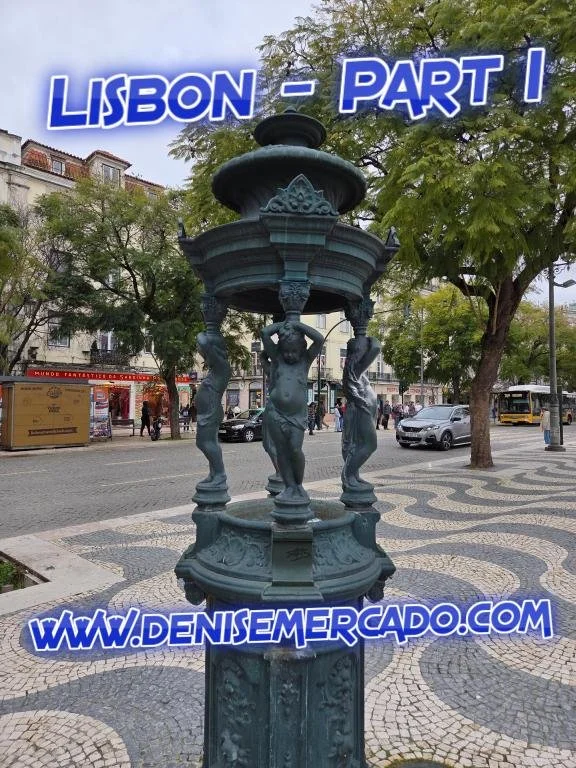
My hotel in Lisbon was located near the Rossio square and within walking distance of many major landmarks. The St. Dominic Church and the fun activities in the square kept me busy on my first day in Lisbon.
The St. Nicholas Church in Lisbon was just as beautiful as the one I found in Porto. The Church and Museum Sao Roque were spectacular with a special chapel dedicated to St. Francis Xavier and an altar of the Holy Martyrs dedicated to several Jesuit saints. Immediately next to the Sao Roque Church and unaffiliated with the church was a special museum that housed the history of the children of Lisbon’s Foundling Wheel. One of the stories of the children from this hospital was a young girl named Gemenia. Here is her story…
Born on 10 May 1891, she was taken to the Foundling Hospital eleven days later. Her mother, Maria da Gloria – unmarried and poor – in search of a better life, migrated from her hometown to Lisbon and found work as a maidservant. She was dismissed upon becoming pregnant and abandoned by the father of the child, Fortunato Teixeira, a shirtmaker by trade.
Lacking the wherewithal to bring up her daughter, she filed an application and proofs of poverty to hand her over. She did not leave a foundling token, nor even suggest a name.
Gemenia was the name chosen by the staff at the Foundling Hospital. She was raised until the age of eight by her wet nurse Joana Goncalves, a resident of the municipality of Pombal, and then by Ludovina Freitas, resident in the municipality of Ferreira do Zezere. She was never reclaimed by her mother or her father. She married, had children and lived to the age of 103. Her grandson, Vitor Mendes, recalls his grandmother Gemenia here.
Pictures of the foundling wheel and the hospital are shown in the video below.
My second day in Lisbon was Ash Wednesday. I attended the 8am Mass at St. Dominic Church and was pleasantly surprised when ashes were sprinkled on my head. This happened once before when attending Mass on Ash Wednesday in Montserrat, Spain. According to an article from Catholic Answers, “sprinkling ashes on the crown of the head recalls the biblical method of putting on sackcloth and ashes as a sign of penance…The American method of putting ashes on the forehead, usually in the sign of the cross, allows the ashes to be visible to others so that the communal, penitential nature of the day might be more readily visible.” With ashes sprinkled in my already salt and pepper hair, I continued my exploring and visited the Church of Our Lady of the Incarnation, the Basilica of Our Lady of the Martyrs, and the Church of Our Lady of Loreto of the Italians – all located on separate corners in the same square.
The Convento do Carmo was another interesting find. This is an archeological museum that was a former convent of the Carmelite Order founded in the 15th century. The church, which was once the main Gothic church in Lisbon, was left in ruins due to the 1755 earthquake and was never rebuilt.
At the top of my list of things to see was the Lisbon Cathedral, also known as the Basilica de Santa Maria Major. This church is the oldest in the city, built in 1147 and has survived many earthquakes. It has been modified, renovated, and restored several times resulting in a mix of different architectural styles. The Lisbon Cathedral has been classified as a National Monument since 1910.
Near the cathedral was the Castle of Sao Jorge. This is another must-see attraction. The hill on which this castle stands played an important part in the history of Lisbon and served as the location of fortifications occupied by Phoenicians, Carthaginians, Romans, and Moors – before its conquest by the Portuguese in the 1147 Siege of Lisbon. The current structure was primarily built by the Moors in the mid-11th century as a defensive citadel and military stronghold. However, the structure today is the result of continuous modifications by Portuguese monarchs and extensive 20th-century renovations. This castle is now a national monument and museum. Despite the cloudy weather the sites were spectacular. It was fun to walk the walls of this 11th century fortress. The beautiful peacocks roaming the grounds of this castle fortress was another special treat.
Immediately near the exit of the castle was the Church of Santa Cruz. This church is an 18th-century building where once stood an old mosque. This small church holds the oldest parish registers in the city with the first marriage record dating back to 26 September 1536. Inside the church, I witnessed a young woman working on intricate renovations of one of the beautiful side altar art pieces.
The Church of Santa Maria Madelena was my last discovery on my first day in Lisbon. Enjoy the video below of all the attractions I visited on my first day in Lisbon! Coming soon are blogs featuring two special day trips from Lisbon and Part 2 of my Lisbon adventure.
Stay tuned and remember to leave a review for my books on their Amazon pages below.
Thank you and God bless…
Use the Amazon buttons below to order your copy of my latest books. Don’t forget to leave a review on Amazon! Thank you and Happy Reading to ALL…..
For my favorite books by other authors - click here.
God Bless and Remember - Sharing is Caring!